Synopsis
Leading vascular surgeons discuss the significance of CO2 flushing in reducing air embolism and stroke risk during endovascular and open aortic interventions.
Moderator:
Portrait of Bijan Modarai, MD.
Professor, Vascular Surgery, Guy’s and St. Thomas’ Hospital and King’s College, London, UK
Panelists:
Fernando Fleischman, MD
Professor, Cardiothoracic Surgery, Keck Medicine of USC, Los Angeles, CA
Portrait of Nikolaos Tsilimparis, MD.
Professor Vascular Surgery, LMU Hospital, Munich, Germany
Portrait of Darren Schneider, MD.
Professor Vascular Surgery, Hospital of the University of Pennsylvania, Philadelphia, PA
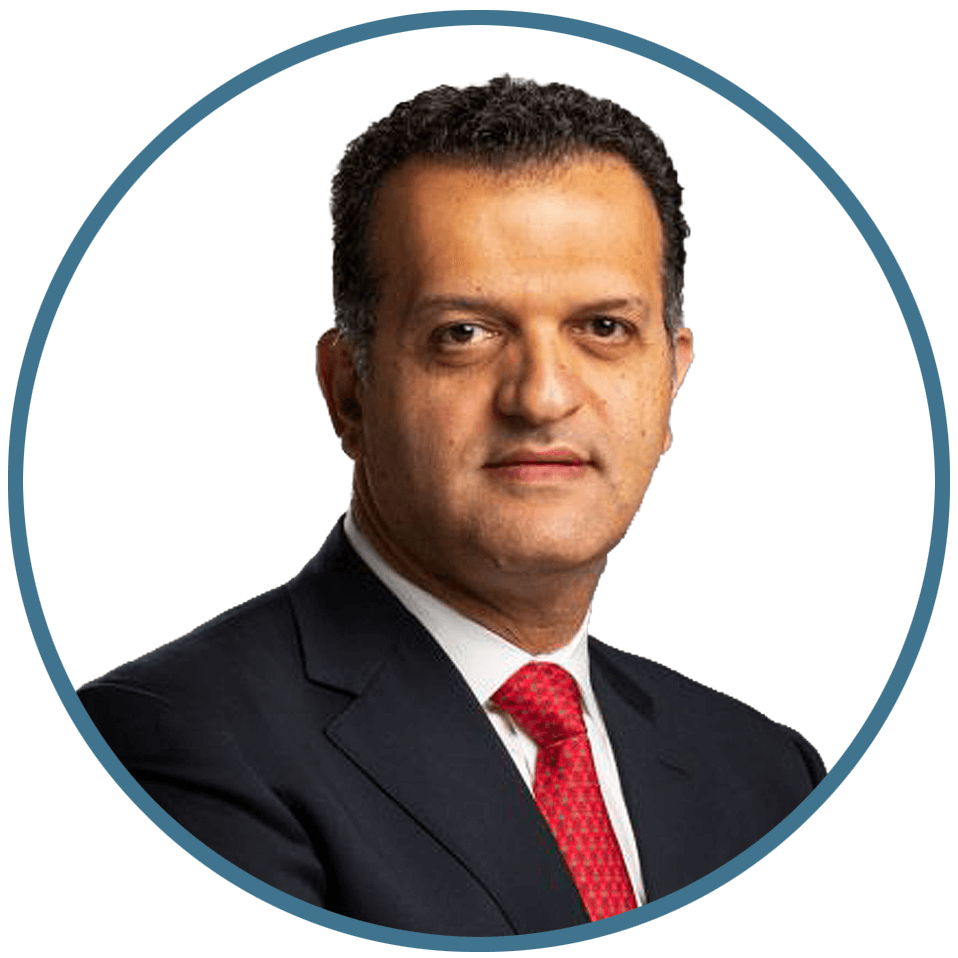
Portrait of Carlos Bechara, MD.
Professor, Vascular Surgery, Loyola University Medical Center, Chicago, IL
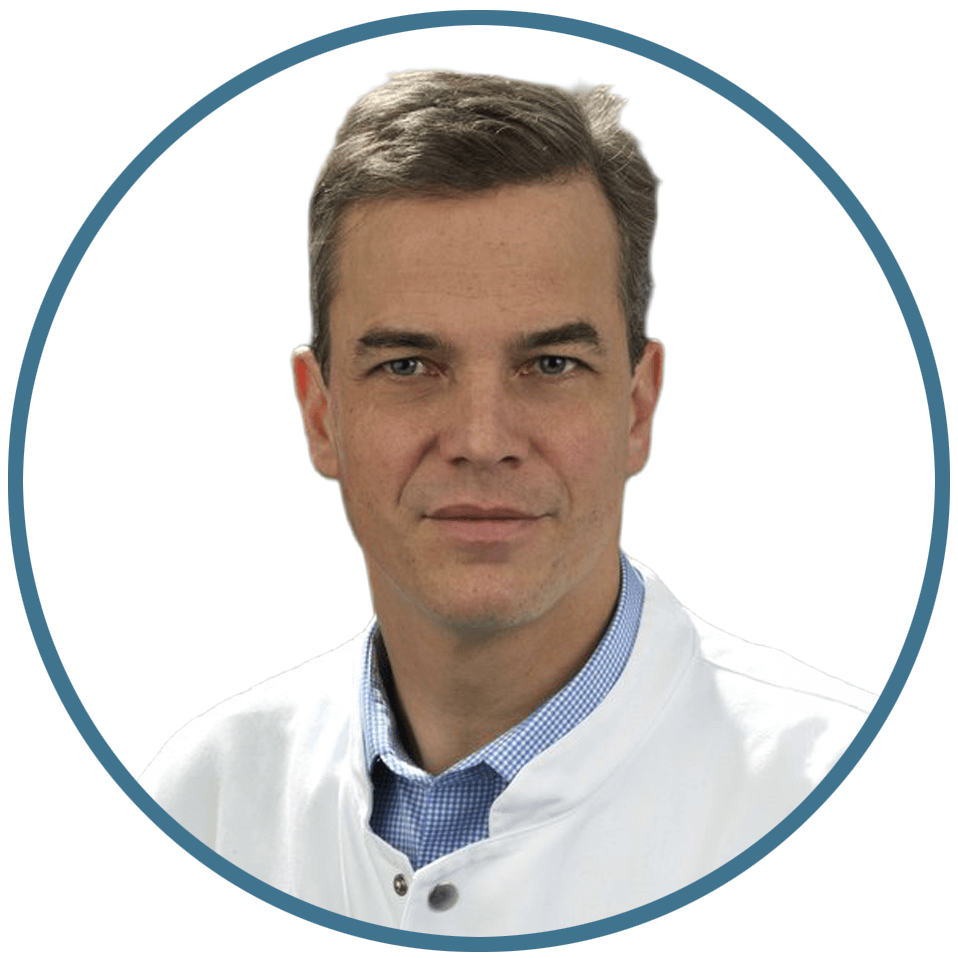
Portrait of Tilo Kölbel, MD.
Professor, Vascular Surgery, University of Hamburg, Germany
Transcript
Dr. Bijan Modarai (00.00):
A very warm welcome to what is the inaugural grand rounds at Cook Medical. My name is Bijan Modarai.
I’m the professor of vascular surgery at Guy’s and St Thomas’ Hospital and King’s College London.
We’re excited to bring this event to you. And the ethos behind this event is to bring together healthcare professionals and key opinion leaders from across the globe to discuss vascular diseases and their treatment. And it’s a platform to foster collaboration, knowledge sharing, and improve the management of patients with vascular disease. Now, today’s subject is focused on CO2 flushing, a concept that has been introduced to circumvent the problems we think are associated with air trapped in endovascular devices and in interventions that involve the aortic arch.
Now, I’m delighted to introduce a number of colleagues from around the world that are going to be discussing aspects related to this with us.
So, if I go round and ask everybody to introduce themselves. First Fernando, please.
Dr. Fernando Fleischman (01:32):
Hello, I’m Fernando Fleischman, professor of surgery here at Keck Medicine of USC.
Dr. Bijan Modarai (01:41):
And Nikos.
Dr. Nikos Tsilimparis (01:45):
Hi, guys, nice to be in this in this ground rounds. My name is Nikos Tsilimparis, and I am a vascular surgeon and chief of the Department of Vascular Surgery in the LMU University in Munich.
Dr. Bijan Modarai (02:00):
Darren.
Dr. Darren Schneider (02:04):
Yeah, it’s a pleasure to be here, so thank you. I’m a vascular surgeon, and I’m professor and chief of vascular surgery and endovascular therapy at the University of Pennsylvania in the Hospital of the University of Pennsylvania.
Dr. Bijan Modarai (02:19):
Thank you, Darren.
Dr. Bijan Modarai (02:20):
Carlos.
Dr. Carlos Bechara (02:22):
Hello, everyone, also a pleasure to be here. My name is Carlos Bechara. I’m a professor of vascular surgery at Loyola Medical Center and also co-direct the aortic center.
Dr. Bijan Modarai (02:34):
And last but not least, Tilo.
Dr. Tilo Kölbel (02:38):
Yes, thanks, Bijan, for hosting this. This is a very important event. I’m excited. My name is Tilo Kölbel. I’m a vascular surgeon. I’m the lead of the German Aortic Centre at Hamburg University Hospital, and I’m really excited to be with you.
Clinical background: stroke risk in arch procedures
Dr. Bijan Modarai (02:58):
Okay, thank you very much, everyone. So, let’s start by setting the scene. So, when it comes to cerebrovascular accidents and strokes, how often do you see this in practice, and what impact does this have on your patients? Perhaps we should start with Fernando. Fernando, can you put this in the context of it both in endovascular and open arch interventions?
Dr. Fernando Fleischman (03:23)
Yeah, I mean, it’s interesting because with the group of vascular surgeons, I live in sort of two worlds, so sometimes I feel like I bring something from one world to the other. You know, using CO2 in the field in cardiac surgery has been part and practice of most or many cardiac surgeons across the country. And the idea being is you use the CO2 to expel the air, so the question is, What is the risk of air embolism, and what contribution of air embolism is the strokes that we see, that are part and parcel of endovascular and open arch work?
And so we believe that CO2 affects and minimizes some of those risks, not all, but any, any 1%, 2% reduction in risk of stroke-like symptoms is important, so I think the goal of CO2 flushing is necessary. I think it’s worth the extra five minutes. I don’t know how we can prove a reduction in stroke rate, but I don’t think it’s necessary, in the sense that you have such a simple tool that costs so little to any reduction.
You know, when you’re talking about a simple tool like this, any reduction would be a benefit. And so, I flush every shield on open arch work, on even aortic valve work, which I do on occasion, and we CO2 flush every Cook sheath. And so, we believe in it.
Frequency of stroke after arch intervention
Dr. Bijan Modarai (05:22)
Okay, Thank you very much, Fernando. We will hold down on CO2 flushing in due course. Just before we do that, though, let’s just get an idea of how big a problem we’re trying to address. So maybe bring Nikos in.
Nikos, how often do you see stroke after arch intervention in your patients, and what happens to the patients that do get this problem?
Dr. Nikos Tsilimparis (05:45):
So, I think that it’s, of course, a matter of which zone of the aortic arch you’re treating, which area of the thoracic aorta you’re treating.
And I would say that the most common cause of a cerebral vascular injury in these patients is most probably manipulation in the arch, especially in pathologies that have a high burden of thrombus or a high burden of atheroma in the arch. That’s probably cause number one for any major cerebrovascular event.
However, we have seen, apart from that, a high number of patients that come out of complex—especially out of complex aortic arch procedures that do not always necessarily have the huge stroke, but they come out in a delirium or they come out with minor defects or the families reports down the way that they’ve been worse than they have been before the surgery over time on the follow-up.
And this is something that we probably don’t have enough focus on during the past years, and I think it’s a sign of these micro-emboli that we see, either a thermatic emboli or a gas emboli. And this is not always or most probably not the cause of the major strokes that we see, but an important aspect that we tend to overlook in our daily practice because we’re happy if the patient can move two legs, can move two arms, and we finish the case and we send them home.
But what’s important for the life of the case, for the patients on the long-term is probably how they will do on a cognitive point of view, how an older patient will get out without having dementia in a couple of years, and this is something I think we tend to overlook.
Dr. Bijan Modarai (07:56):
Thank you, Nikos. So, Darren, let’s come to you. Do you agree with everything Nikos just said? Are there any comparing/contrasting outcomes in your practice? What are your thoughts?
Dr. Darren Schneider (08:08):
Yeah, I certainly disagree with—I mean, I agree, rather—with almost everything that’s been said. I mean, I think that the risk of stroke is one of the major limitations in propelling this field forward of endovascular treatment of the aortic arch.
And certainly the risk is related to the anatomy, the more proximal we go, the types of devices, but also, as Nikos mentioned, the extent of disease that could raise risks for atheroemboli. I think the risk, you know, with arch work is usually somewhere between 2% to 10%. But I think it also depends on how hard you look for it as well. I mean, if you’re doing diffusion-weighted MRIs on all your patients, that stroke risk may actually be much higher than that. And even if it’s relatively low, it’s a devastating complication potentially for the patient.
And so, that’s why if there are things that we can do to mitigate that, to reduce the incidence, to push the field forward, but also make it safer for patients, I think it’s critically important.
Mechanisms of embolization: air versus debris
Dr. Bijan Modarai (09:15)
Thank you very much, Darren. We have a chat function here, and Fernando’s just put in the chat function that in his practice, they see a stroke rate of 8–17% with open arch work. Carlos, I will come to you. Do you agree with what Nikos said, that most of the reason why we have these events in the arch is embolization of debris in the arch? How big a problem do you think air embolism is?
Dr. Carlos Bechara (09:50):
Well, I also agree. I’m just going to add a few more things. I mean, we all know that if the patient has a minor stroke or major stroke, obviously it’s devastating, affects the one-year mortality, and affects their cognitive function, so definitely, it’s a big problem.
And like Darren said, now with the newer ARC specification, even radiographic evidence of stroke without clinical symptoms is considered a stroke. So definitely, we need to do better at reducing that.
Now, the reason I got interested in— I know Nikos talked about also the zone landing where the proximal we go, and also if we’re dealing with thrombus or atherosclerotic, but on the other hand, the way I see it, if you look at the trials for Type B dissection, even for zone 3 landing, had, I think, like anywhere between 3—5% stroke, depending on which one you see.
So I mean, you would think there’s no thrombus. Most of these, as we know—most of them—have clean, healthy vessels, not atherosclerotic or thrombus, and they still have a stroke, so the question, What is it? Is it gas? Is it some debris, if it’s not a plaque?
So, I think there’s more that we should learn and prevent, and if it’s something simple, like flushing, we can reduce it. I think we should do it.
Development of CO2 flushing
Dr. Bijan Modarai (11:06)
Thank you, Carlos. Tilo, we’re going to come to you. You know, you pioneered this concept of CO2 flushing to get rid of gas around these endovascular devices, so give us your take on what you think is the significance of this problem. I know you’re going to talk to us over a video of the process of CO2 flushing, and then just tell us how long you’ve been doing this and what do you think it’s brought and changed in your practice?
Dr. Tilo Kölbel (11:41)
Yeah, thanks, Bijan. I agree with what has been said, and I, as in other areas, notice that it’s really hard for us to move away from beliefs that come from the textbook knowledge that we learn during our education, which says that stroke and cerebral damage come from solid emboli that are blocking brain vessels. And it’s a newer understanding that gas can actually do the same or air can do the same, and some recent studies have shown that the signals that are taken up by TCD in the mid cerebral artery are actually more than 90% of gases nature.
So we should not underestimate, especially as Carlos said, also not in cases where deployment is in the descending thoracic aorta, as gas more than solid emboli, has the ability to travel against the stream during the diastolic flow, and even if we place in zone 3 or zone 4, gas bubbles can easily manage to get in the carotid artery. So therefore, I think it’s really— we should look at it as a seat belt. It’s something that increases the safety of what we’re doing at a very limited effort and has a high potential of increasing the outcomes, improving the outcomes of our patient. And the reason I became interested in that has really been patient outcomes.
The first case where I noticed air embolism was a colleague, a patient of mine where I, for a serendipitous reason, did an angio during initial opening of the graft and I could see bubbles moving up the innominate artery, and the patient came out with a massive right-sided stroke of this prophylactic procedure, which I found personally devastating for him and for me as well.
So, we started off deploying endografts into buckets of water, and we were amazed how many bubbles came out despite standard flushing. And from there—that was 2013—we moved to testing what could improve that, and CO2 flushing was the obvious thing to do, because CO2 is so much less dangerous than room air. And as we had into integrated this into our operating room workflow with every graft being prepared CO2, it actually doesn’t add significant time to the preparation. And the nurses and technicians are doing this, so it’s not even something we think about. It’s just done automatically in every case, even when we do, actually, thoracoabdominal work or infrarenal work, because it’s just part of a procedure. Maybe we should demonstrate how it is done. And I know all the colleagues here probably do it in a little bit different way. I prepared a little video to show you how we do it in Hamburg and may show that it’s pretty easy.
CO2 flushing workflow demonstration
Dr. Tilo Kölbel (15:01)
So this, as you can see, is a complex Cook arch device, and the CO2 coming from tubing that is to a container, which has also a particle filter in between, and then we do the flushing at a pressure of 1 bar to 1.2 bar. Here you see the container in the left-hand image, and after flushing had been done for two minutes, the regular volume of saline is used to flush through the catheter
So that’s probably the only caveat: When doing CO2 flushing, we cannot forget to do it in the right order. So, CO2 flushing needs to come first and saline flushing second because the saline is the fluid that absorbs the carbon dioxide and actually reduces the volume of gas. That’s how we do it. It was a little bit short, the video, but it actually takes 2 minutes, the carbon dioxide part.
Dr. Bijan Modarai (16:10):
Tilo, thank you very much. That really does put things into context as to what the procedure involves, et cetera, so I think that’s great.
So, Nikos, do you do CO2 flushing in a way that’s different at all to what’s just been illustrated?
Dr. Nikos Tsilimparis (16:29):
Well, actually, no, it’s the same procedure. I do come from the Hamburg school, so that’s the way we do CO2 flushing as well. I think it’s very important to create a clear strategy, and I think the idea of probably implementing it in all grafts is not a bad idea at all, so that everybody has a clear pathway and how it works and everybody’s acquainted with these steps. Having the experience that, sometimes, physicians are—especially some others in the group—when they are not keen on doing it or don’t do it very often and they have somebody doing it for them and it’s just a standard of care for everybody.
So we have also moved to using it more and more, as opposed to selected cases at the beginning.
Integration into clinical practice
Dr. Bijan Modarai (17:34):
Okay. So then I’ll come to Fernando again. Fernando, I think you touched on this. So, how do you use CO2 flushing for your open procedures? And do you use it for every zone in the arch for your endovascular procedures, or are you selective?
Dr. Fernando Fleischman (17:51):
Yeah, I think that’s why these things are so—and thanks for inviting me—these things are impressive because you learn so much from your other colleagues from around the world. I think Nikos is right. I think we should probably do this on every case. We haven’t.
And Carlos is right, it probably happens even in zone 3, zone 4 deployments, and so we should probably just institute a policy that every single case is flushed. There’s not much to that. And thank you, Tilo, for showing a flushing of a complicated arch device that we do not have available in the United States. Appreciate that.
The way we flush open is, we place 18 gage needles with the CO2 on the back of them through the skin up at the top of the arch for arch procedures and an open thoraco into the field, one from the bottom, one from the top, just through the skin into the field
And you figure that CO2 would come to basically force the air particles up out of your field and maybe reduce these risks of neurological events that are hard to define because they’re really not stroke, but, to both Darren and Nikos’s point, difficult to see and understand when the patient doesn’t fully have a perfect wake-up from an arch procedure. But that’s how we flush open—we just basically force CO2 in the field constantly, the entire case.
Review of clinical and imaging evidence
Dr. Bijan Modarai (19:41):
Okay. So, you know, what evidence is there that this CO2 flushing translates into less cerebral embolization during these particularly endovascular procedures and improves outcomes? Darren.
Dr. Darren Schneider (20:00):
You’re putting me on the spot here when Tilo is probably the world’s expert in answering that question.
Dr. Bijan Modarai (20:07):
I’m going to go to him next. Let’s see your views.
Dr. Darren Schneider (20:10):
Good, because he can correct anything that I don’t say correctly. But in any event, I do also want to give Tilo credit, because he’s really introduced and championed this concept. And it was probably more than 10 years ago—or I don’t know exactly—when I saw Tilo present this and some data, that for me, that was it. So easy to CO2 flush.
And I was shocked by how much air could actually be trapped in these devices, even after flushing with a high-volume saline, so I adopted it quite early on.
I think—and Tilo’s already mentioned this and he can give you the exact numbers—but I think when you look at studies that have been done with both looking at how much air is actually in the devices that you can’t effectively evacuate it all with saline flushing, it makes it important that you want to displace that air with CO2, which is going to be readily absorbed and hopefully not cause the same cerebral vascular complications.
The other thing is that I think it’s also hard to totally put your finger on it because it depends how hard people have looked. When you certainly look with TCD, you see that there is a lot of air particles in addition to solid particles that could be involved, and when studies have been done where patients have had diffusion-weighted MRIs, there’s a large number of signals that are detected on these scans in otherwise clinically asymptomatic strokes. But still, we believe that those could have some long-term consequences in terms of overall cognition and dementia and things like that.
So, I think just to sum up, I don’t think it’s a trivial problem. I think it’s eminently preventable in terms of the air particles, and I don’t think we know the true incidence because we don’t look for it hard enough. But it’s probably double or triple what what’s stated in the literature for rates of stroke, if you look really hard.
Dr. Bijan Modarai (22:31)
Great, Darren. I think that was a really good overview, actually. But we’ve said we’ll ask Tilo, so we will go over to him. So, Tilo, you’re obviously an enthusiast for this. Give us how strong the data is that—well, first of all, how effective you think CO2 flushing is at reducing air emboli, and what is the link between that and an improvement in outcomes, be it stroke, long-term cognitive impairment, et cetera.
Dr. Tilo Kölbel (23:04):
Yeah, Bijan, great question. There’s a lot of work that needs to be done, because we still don’t know much about it, and right now, it’s a little bit still this situation that we’d like to make it as safe as possible without exactly knowing how much, what size of air bubbles does and what area of the brain.
But I also want to give credit to some other groups that have worked on this, and one is where Carlos has been working, at Houston Methodist. There has been extensive research on TCD and when HITS appear during the procedure. It’s always been fascinating that the most HITS or the most signals of particles traveling the mid cerebral artery have been during opening of the devices. I think this was always a hint, and I benefited a lot from the data that was coming from Houston.
Another group that is extremely active here, as you all know, is the group from Imperial College. David Gibbs, who has been studying air embolization for a long time and actually has shown first data, controlled data, that you can reduce the number of lesions on DW-MRI by carbon dioxide flushing endografts before deploying them. And the same group has also been working on TAVI, so this becomes more interesting now, as this is an even larger group of patients. And the INTERCEPTavi study has shown in a randomized fashion that if you carbon dioxide flush TAVI valves, that there is a significant reduction in brain damage, as of silent brain infarctions, after TAVI.
That has not been published yet, only presented at EuroPCR, but I hope that it will be available soon, and I believe that will change, also, the acceptance of the problem in the cardiological community. It’s always been amazing to me to see how different groups of physicians react to the problem of air embolism. Cardiac surgeons are extremely sensitive and aware of the problem.
I believe vascular surgeons are getting aware of it, and some other specialties haven’t had their focus on it so much. Still, I think it’s a way to improve outcomes of all these complex central interventions.
Neurologic outcomes and under‑recognition
Dr. Bijan Modarai (26:03):
Thank you, Tilo. Carlos, what’s been your experience? So, Tilo mentioned you used TCD. What kind of reduction in air embolization have you achieved, and do you think CO2‘s enough? Should we be doing more to reduce the air even further that’s embolized?
Dr. Carlos Bechara (26:27):
Well, that’s a tough question, but I mean, I’m just going to answer a few things in addition to what Tilo mentioned. Also, what we noticed is that when you do balloon angioplasty, there’s actually a significant amount of HITS. And the question is, why?
I mean, we’re always asking those questions. Is it because we’re squeezing the graft or we’re squeezing the air out? I don’t know, it sounds simple, but you know, that’s kind of the thought process that— Why does it happen? Also, not just with deploying a stent, also with balloon angioplasty.
And again, the reason I got interested in, because we had high TCD practice and expert in TCD, and the same thing: we’re doing a Type B dissection zone 3, maybe 4, and we see lots of HITS, so and then obviously, like Darren said, I got to meet Tilo, here, and talk about it, and I got into this. And we actually tried. We tried to do an experiment on pigs where—we didn’t publish the data—but we actually injected different particle sizes.
We injected air. And we tried to see if the HITS, the signal that you see on TCD, if it’s different, to try to say, “Okay, this is air, this is particular, this is atheroemboli.” Honestly, it was very hard. It was very hard, because it’s not a very sensitive test; it just shows you the HITS, as most people know.
I don’t know by TCD alone we’ll be able to, because it doesn’t give you— well, I take that back. It does give you the number of HITS, but I don’t think that’s going to be enough to say, “Well, CO2 flushing reduces it by this or that.” I think it’s going to be clinical or maybe MR finding.
Dr. Bijan Modarai (28:04):
Okay, so how hard, do you think? I mean, you know, we’ve really scrutinized neurological outcomes after these type of interventions when these patients are within a structured study, but do you think that we look hard enough for events and clinical sequelae at the moment? Maybe, Nikos, you can take that.
Dr. Nikos Tsilimparis (28:32):
Well, I think that’s the key point, and that’s what I also suggested a little bit earlier. As I said, we have a very high number of patients that get these procedures that come out with an outcome that we consider a major success because it didn’t have a major stroke, but still, they have some minor deficits which we tend to interpret as perioperative problems of other kinds. But indeed, there might be minor strokes, and we have started in Munich a protocol where, actually, even though sometimes as best medical care, we try to see if these patients have a high number of HITS and new emboli in MRIs. And all the complex procedures have a lot of emboli, and we know that.
And if you look at it, not per CT scan and not only the ones who are clinically relevant, but also in asymptomatic postoperative patients, you will see a huge number of new HITS. We knew that from a lot of studies from other centers. We are replicating those data in our complex procedures right now, and we see it, and we do know that the patients who have silent HITS on the long term also will have worse outcomes in terms of neurologic events.
So, do we need to prove there is an elephant in the room? I think no, because you can indirectly extract that evidence that it is of benefit to reduce the risk as much as possible. And some of these HITS are the gas emboli, so it is important to do as much as possible to prevent them, because even if we’re not able to get high-level evidence directly pointing out that this is the cause of strokes, why they’re minor or major, we have indirect evidence that we know the strokes, the HITS are there. We know that HITS, long-term, cause negative cerebrovascular outcomes. So it is necessary to deal with that and treat that.
Risk management and procedural safeguards
Dr. Bijan Modarai (30:58)
Thank you, Nikos. I’m going to go back to the concept of CO2 flushing in a minute, but I just wanted to go back to Fernando. And I did mention—he said that there’s up to 17% risk of stroke associated with open arch work.
How does that compare with endovascular in your practice, because you do both? And talk to us a little bit about case selection, particularly for endovascular, and how you sort of try and circumvent, apart from their emboli, the risk of stroke, and then we’ll come back to air emboli and CO2 flushing, because I think that’s an interesting point in itself.
Dr. Fernando Fleischman (31:43):
Yeah, I mean, there was a Japanese group two years ago at AATS that did MRIs on every single cardiac case done at their hospital and found a signal rate of 82%. So to your question, Bijan, are we looking hard enough? No, we’re not. Because if we were, we could get MRIs on everybody, right, and we’re not.
So, back to our 8–17% stroke rate, we as a practice, after hearing the numbers and hearing the issues with stroke rate, we have gone to MRI on anybody who looks in any way—MRI of the brain for anybody who has any kind of event post-surgery.
And that ends up being a lot of MRIs, and you find a lot. So, how do we define stroke? So, in the past, I think both vascular and cardiac surgeons, we’ve defined stroke as these life-changing events where someone can’t move their left arm or their right arm, and I think we need to get— we need to start calling strokes what they are.
There’s life-changing strokes. There’s strokes with no sequelae. There’s air embolism-type events and neurologic events during surgery. How do they compare open versus endo?
At least, we’ve noticed in our endo work that we have similar endo events or similar neurologic events at both. They’re slightly different because of how you deploy things, but it’s a similar 8–10% type of neurologic event. Again, we are looking— here at USC, we’re looking very aggressively for them.
So I think if you extrapolate out and then compare to other centers where they’re talking about life-changing stroke, we are doing quite well. But we are also looking for more strokes, because we’re more intent on that. And I think that’s part and parcel of arch work at this time.
I also want to say that I think we’re in the golden age of both open and endo arch work. And as we enter this golden age, we are trying to push the numbers to these numbers that have never been or never even dreamed of. We’re seeing both at the Penn group and the Michigan group and our group and Stanford, we’re seeing open arch, redo open arch, with a mortality less than 5% and a stroke rate of less than, you know, 8–10%.
And these are numbers that we all— I mean, these are redo arch procedures. And we’re seeing the same on the endo side, where we’re pushing these results to these numbers that were dreamed of. So, I think when you extrapolate that out, I think patient selection will be what determines which route to go, because you’re looking at two very, very different treatments.
We found in our group that COPD at age over 75 are pretty good ways of determining success or nonsuccess in the open group, and those patients are sort of sent to the endo route. But those are the only two signals that we saw in our study that would push you towards the endo route for an arch procedure. But I really do believe as we push into this golden age, we have to push these numbers of neurologic events lower, and the only way to do that is to get more imaging, get more understanding of the lives they live post-surgery, and then extrapolate that back to how do we prevent those in not just CO2 flushing but open arch techniques on branch first or clamping, you know, all these things that we can figure out over time.
Dr. Bijan Modarai (35:57):
Okay. So, that sort of leads me on to a quick question I want to ask all the colleagues. So, we think that there is a simple thing we can do, which is CO2 flushing, and we don’t quite understand the enormity of the problem that we face after these type of procedures.
And perhaps we all have moved to the fact that we don’t look hard enough. So how many of you, as a neurologist, examine all of your patients after one of these procedures? Anybody? My hand is firmly down. So, there we go.
Okay, so, why wouldn’t we flush all these devices with CO2? Are there any downsides to it? Perhaps Darren can take that. When you started doing this in your practice, did it cross your mind whether there were any downsides to you adopting CO2 flushing?
Dr. Darren Schneider (37:00):
I certainly haven’t encountered any significant downsides. And I think that the way Tilo had presented it—and I kind of mirrored, you know, his technique, what I’d seen him doing—so he helped by pioneering it so that I didn’t have to invent something new.
But I don’t see a lot of downsides as long as you take the appropriate precautions. I do think that you need to have an inline filter to make sure that there’s no accidental introduction of any particulate into the device or the delivery sheet. I’m still an aggressive saline flusher, so I’ll do the two-minutes-plus of CO2 and then— Everybody knows I flush my own devices personally. I never leave that to one of the nurses or technicians.
Hopefully, they don’t get offended that I don’t trust them. I do, but this is something that’s so important to me, so I flush every device myself that I’m putting in the aorta for these repairs. But, I really have seen virtually no downside from CO2 flushing if you know the basics of how to do it safely.
Dr. Bijan Modarai (38:08):
Okay, great, Darren. Carlos, should we come to you? So, any downsides?
Dr. Carlos Bechara (38:15):
No, no downside. I agree with what Darren mentioned and the importance of making sure the filters. So I think having the process down where everyone is aware how it’s done. The only thing I would bring up is that we did have—this was way back before even moving to Chicago—we did have some contaminated CO2, so you have to be careful, if you use those tanks, that you have the filter, you engage the nursing and the hospital to make sure that you use your proper tubing and filter so you don’t do that.
Now having said that, I have moved to— There’s a device that comes with CO2 that gives you up to 2.8 pressure, if I remember well, that I use sometimes to flush, and I’m like Darren. Most times I do it myself. And then also I do, followed by three 60 cc syringes of saline. That’s kind of my protocol, again, not based on any science, but also, I like to do three 60 cc of saline flushes after my 2–3 minutes of CO2.
Adoption challenges and practice change
Dr. Bijan Modarai (39:17):
Thank you, Carlos. So Tilo, particulate filter and making sure you use fresh tanks. Any other tips, tricks, downsides you warn people about when you talk to them to try and convince them CO2 flushing is best?
Dr. Tilo Kölbel (39:35):
No, it is so simple, so I would really recommend to trust the nurses and technicians and work with the same people. And, you know, I always try to get feedback about the outcome of our patients also to the nurses so that they feel really engaged, and I appreciate that Darren and Carlos, take the time.
I think that would take too much time from our procedure if I would do this all personally, so I’m really happy that I feel safe with them doing it. And actually, if you integrate it into every graft that there’s no question and every nurse, every technician knows how to properly do it, it’s actually faster to do this and less time-consuming than to discuss or consider in each and every case whether you want to flush or no flush. I think if it’s clear for everybody that every device is flushed, that is actually the easiest. And if you— I think in our other argument for the CO2 flushing is, if you think yourself how much air would you find, yourself, acceptable to be introduced in your own central vascular system, how many bubbles or how many milliliters or microliters of air? It’s very easy to answer that. We would all say it’s not acceptable. We don’t want to have any bubbles. It should be 0 if possible. And so for me, Bijan, it’s similar to radiation.
We should apply the ALARA principle. It’s as low as reasonably achievable. We shouldn’t need to make stunts like reload every device underwater, et cetera, but everything that’s easy to do is a good idea.
Dr. Bijan Modarai (41:41):
I think that’s actually a very nice analogy. But you must have come across physician colleagues who were not convinced. So, can you tell us about why you think some may not be convinced that this pretty simple step is worthwhile?
Dr. Tilo Kölbel (42:00):
You’d be surprised. Many colleagues told me they find it too difficult to get a CO2 container to the operating room. They have applied for it and they don’t get it delivered, and I think the biggest argument is to change your practice.
It’s always a big effort for everybody if you have to change your practice, something very fundamental. If you would go from 10 mL to 30 mL syringes, for instance, something basic but different to your current practice. It’s hard to make those changes, but once you’ve done it, it’s not a thing. You almost forget about doing it.
Dr. Bijan Modarai (42:48):
Okay. Nikos, you said you’re from the Hamburg school, so you adopted it seamlessly. Have you come across colleagues that aren’t so convinced? And what do you think the main reasons for that are?
Dr. Nikos Tsilimparis (43:01):
I would totally agree with Tilo. I mean, we have to admit that changing your practice for some people is easier because they jump on there. You know, they’re the people who jump on something new and they like it and they are very enthusiastic about it, and then there are the people who really need to see hard evidence to change their practice. And I mean, we cannot disregard this, and it’s also— I respect that. So, a lot of people come with the argument that there is no really hard evidence to support it.
And the second argument is, “I don’t see in my patient, really, a clinical benefit, and I tried it and it’s not better, it’s not worse. I still have had a stroke after I did CO2 flush.” I think the argument for that is that, as I mentioned before, we are treating something we’re not seeing.
We are managing something that we can easily avoid, and it’s important to also make sure that you do the best for the patient. So, I think we need to convince—and this forum is the absolutely the best way to do it—convince these colleagues that you just need to go through your inner hurdles and just start doing something. It’s as simple as that.
And I am sure that the industry will come up with ways sooner or later to help us do it even easier and faster. And the next thing that we have to do on our side, of course, is generate some more data or present the data properly so people can get sensibilized and start doing it.
Procedural barriers to CO2 flushing
Dr. Bijan Modarai (45:04):
Thank you, Nikos. That’s a really nice summary of how we should approach things. Darren, so are there any technical procedural barriers to CO2 flushing? Are there any cases you wouldn’t consider it for?
Dr. Darren Schneider (45:21)
You know, I have not CO2 flushed for every endovascular aortic case, but I do it for any case that’s zone 4 or more proximal. So anytime I’m halfway up the DTA with a device, that device is going to be saline-flushed. Impediments and barriers— I mean, I think that the biggest barriers— I mean, almost every hospital has CO2. I think that the biggest barriers are that some people, it’s hard to change and to introduce new things, and so, I think that the others have talked about the importance of education. Certainly, we educate our trainees, those coming from the Penn school as well, or learning how to CO2 flush devices left and right. But I think we also need, you know, our societies and things to start making this a guideline and a record recommendation, because people do tend to follow those because then they get concerned that they could get in trouble if they have a bad outcome, that it’s a deviation from a standard of care.
I mean, I see that the barrier for this is so low, the risks are so low, and if you can do something that potentially reduces stroke, I think that’s important. And I think we’ve already generated data that clearly shows that air emboli occur and that CO2 flushing is a way to reduce that risk, so I’m kind of hardline on this, and I’m still very surprised when I hear— Like, even last week I had a device rep who was from out of town coming to watch a case and telling me that he’d never seen CO2 flushing done. And to me, that’s just baffling, because it’s been around for a long time, and I think we need to do work, and I think that this webinar is a great way to educate people, but I think we need to continue to do work to disseminate this more.
Education, guidelines, and future use
Dr. Bijan Modarai (47:22):
Thank you, Darren. Carlos, we’re coming to the end of this webinar, but I’ve got a couple more questions. So, how do you spread the message? We’re enthusiasts. How do you spread the message? Again, are there any barriers, any particular procedures, devices where you would say, “Okay, not for these, but otherwise, this should be routine”?
Dr. Darren Schneider (47:48):
I mean, I think it has— I mean, what have been said is spot-on, especially with, hopefully, guidelines or maybe multiple-society consensus statement, maybe, because I can tell you, talking to a neuro interventional radiologist, they see it, and they believe in an embolism. They would love to get their hands on something easy to use to flush their devices, because, you know, also neurosurgery or neurointerventional is also moving a lot to a neurointervention instead of open.
But I think also our trainees see it, and that’s, I think, huge. People coming to visit—physicians—see it. I think that’s also another way to spread the message. And honestly, I compare this to, like, resistance. You know, I was an early adopter for—I mean, I want to go, take you back, I don’t know, 10, 15 years—for percutaneous, or even more, percutaneous endovascular, you know, TEVAR and EVAR, and then we, I personally, got a lot of pushback. And now, what, 90-something percent, if not more, is being done percutaneously. So, I mean, we’re always going to see some resistance to change, but I think with guidelines, consensus statements, trainees, education, webinars like this, I think we can spread the message, because the data is there, and more to come.
Now having said that, I personally haven’t been doing it for my thoracoabdominals, even though there’s some data—I don’t want to deviate from this—but about spinal cord ischemia with that, but I think I’m probably going to start adopting that more and more in that arena too.
Long‑term outlook and innovation
Dr. Bijan Modarai (49:18):
Thank you, Carlos. Tilo, I’m going to come to you for the final words. So, you started this movement. And— Look into your crystal ball and tell us where you see things going in the next 5 years. Where would you like to see things going in the next 5 years in this space, and what are the priorities?
Dr. Tilo Kölbel (49:38):
So first, let me say that I’m really excited to see that enthusiasm for CO2 flushing and improving stable outcomes for our patients.
What I see is that more and more colleagues are adapting the technology and it will become a integral part of how we prepare devices. First, it will start in the arch, we’ll move to the thoracic, and then we’ll understand that other tissues, like renal tissues, are also sensitive for air embolism, that we’re going to start doing it in the thoracoabdominal, infrarenal arena.
And hopefully we will see that companies will pick up and improve their devices, improve new flushing technologies. Maybe CO2 is not the end of the story. Maybe there will be special devices who do an even better job. Maybe in a few years, regulation will ask companies to report the amounts and numbers of air bubbles.
I would always prefer a device where I get the exact information about “So, how much does this device expel without CO2 flushing, with CO2 flushing?” so that I know what risks I’m exposing my patient to. And, this is a scenario over 10 years, but I strongly believe in 10 years, we will have grossly reduced the damages that are coming from air embolism in our patients with aortic disease.
Dr. Bijan Modarai (51:27):
Tilo, thank you very much, and I think on that point, it’s important to highlight that Cook Medical is now approved to launch the Zenith Alpha® Thoracic 2 in 2025, and that’s the first device that’s indicated for CO2 flushing.
Okay, time is up, unfortunately. I think this has been a really engaging and excellent discussion. And on behalf of Cook Medical, myself, I just want to say to all the colleagues on this webinar that we really appreciate all your contributions to this inaugural Global Grand Round, so thank you very much, once again.
Interested in speaking with a
Cook Medical representative?
Please click the button below and submit the required information to connect with your local Cook representative. This form is intended for US-based physicians only.