Five key components to providing comprehensive care for patients with aortic dissections. BY SUKGU HAN, MD, MS, AND FERNANDO FLEISCHMAN, MD Aortic dissections make up a significant portion of aortic emergencies that can be rapidly fatal. Time-dependent mortality and morbidity…
Education
Watch Global Grand Rounds episode 1: CO₂ Flushing Panel Discussion
Awareness
ZBIS is approaching one year launch milestone; listen to physicians talk about their experience.
Thoracic Product Portfolio
Cook offers disease-specific treatment options that are designed to help you provide a durable repair in the thoracic aorta. View product indications for use, component ordering information, and introduction system and graft specifications.
Abdominal Product Portfolio
Maximize your seal in the abdominal aorta with a variety of disease-specific Zenith endovascular grafts. View each product’s indications for use, component ordering information, introduction system, and graft specifications.
Zenith® endovascular accessories
Cook offers a portfolio of procedure-specific accessories to support your endovascular procedures. View each accessory’s indications for use and ordering information.
MyAortic Case Support
When you manage aortic disease, you can expect more from Cook: more clinical support, more educational opportunities, and better business solutions.
United States product catalog
View the abdominal and thoracic product catalog pages for Zenith devices and accessories available in the United States.
European Union product catalog
View the abdominal and thoracic product catalogs for Zenith devices available in the European Union (except France), the United Kingdom, Switzerland, Norway, Iceland, Turkey, and Liechtenstein.
Our heritage
Cook Medical’s heritage of innovation began decades ago in 1963 when our founder, Bill Cook, developed the fine art of listening—listening to physicians and identifying what they needed to get patients back to living better lives.
Our heritage of collaborating with physician pioneers has led to a legacy of creative, durability-by-design product development in the aortic clinical specialty.
Aortic disease
Aortic disease is currently an incurable, progressive condition with many complexities, which, left untreated, could be life threatening. Since its inception, Cook Medical has been dedicated to providing a complete aortic therapies program, offering a portfolio of endovascular products and services that assist physicians in the management of aortic disease.
Aortic aneurysm
The aorta is the main blood vessel that carries blood from the heart to the rest of the body. An aortic aneurysm occurs when a section of the aorta weakens and begins to bulge. This bulge in the aorta is called an aneurysm. An aneurysm can get larger over time as the walls of the aorta become thinner and stretch like a balloon. When an aneurysm occurs in the part of the aorta that runs through the abdomen, it is called an abdominal aortic aneurysm. When an aneurysm occurs in the part of the aorta that runs through the chest, it is called a thoracic aortic aneurysm. Learn more about the causes, symptoms, and treatment options of aortic aneurysms here.
Learn more about the causes, risks, and treatment options for aortic dissections.
Latest News
A review of this devastating complication including incidence rates after TEVAR for TBAD and the roles of left subclavian artery revascularization, aortic coverage, and cerebrospinal fluid drainage. BY KEAGAN WERNER-GIBBINGS, MS, FRACS, AND BIJAN MODARAI, PhD, FRCS Paraplegia is a…
An overview of advanced imaging methods for the diagnosis and treatment of type B aortic dissection. BY DARREN KLASS, MBChB, MD, MRCS, FCRC, FRCPC Imaging of aortic dissection can be performed both periprocedurally with computed tomography (CT) and intraprocedurally with…
A look at how zone 2 involvement and proximal seal affect TEVAR outcomes for TBAD. BY JOSEPH V. LOMBARDI, MD Zone 2 involvement (ie, disease extending to the aortic segment between the distal margin of left common carotid artery [LCCA]…
 By Gustavo S. Oderich, MD The following quote from David Hartley, FIR, remains true today: “It has become clear that not only the technology but also disease progression plays an important role in the durability of endovascular aortic therapy.”1 Endovascular aneurysm…
  Jesse Manunga, MD, is a vascular surgeon at Abbott Northwestern Hospital in Minneapolis, Minnesota. Dr. Manunga shares his thoughts on getting experience with FEVAR as a new attending and building a team to support the procedure. How did you start…
  Mathew Wooster, MD, is in his fifth and final year of the integrated residency program at the University of South Florida in Tampa. Dr. Wooster shares his experience with FEVAR as a fellow and how it has impacted his job…
  Martyn Knowles, MD, practices vascular surgery at UNC Rex Hospital in Raleigh, North Carolina. He shares his advice for establishing a FEVAR practice in a community setting. What is your practice like in Raleigh? Our group practices at a 650-bed,…
  Shang Loh, MD, is a vascular surgeon at Stony Brook University Hospital. With several years of experience now in practice, Dr. Loh shares his advice for residents and fellows. What can residents and fellows do to prepare for full-time practice…
  Dr. Wei Zhou, MD, FACS, is a professor of surgery and chief of vascular surgery at the University of Arizona. For the last 10 years, she was chief of vascular surgery at VA Palo Alto Healthcare System. Dr. Zhou shares…
  The following video outlines a method of planning and sizing which Dr. Andres Schanzer utilizes to accurately size Zenith Fenestrated Endovascular Grafts for his patient population at the University of Massachusetts Medical Center. It is not necessarily endorsed by Cook…
  Dr. Shadman Baig is a vascular surgeon at the Baylor Scott and White Medical Center, and an instructor for Cook’s Essentials of FEVAR: Endovascular Techniques for Treating Complex AAAs course. Get to know Dr. Baig. Where did you grow up?…
 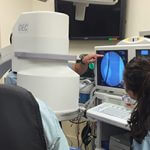 The Introduction to Endovascular Therapies for Peripheral and Aortic Interventions course, which is offered through Cook's Vista® Education and Training Program, covers a wide range of topics related to the treatment of aortic aneurysms, common PAD and other vascular diseases…
 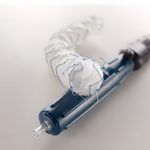 In the latest supplement to Endovascular Today, physicians from around the world discuss how new thoracic stent graft technology has evolved to better address patient needs. Read the articles from the supplement below: ARTICLE TITLE AUTHOR DESCRIPTION Building durable TEVAR…
  Cook Medical offers a variety of regional training opportunities on the Zenith portfolio through the Vista Education and Training Program. Jason Lee, MD, talks about the value of Vista training for both fellows and tenured physicians. Q: Why…
  Dr. Jason T. Lee, professor of surgery and program director at Stanford University, has a vested interest in helping educate incoming vascular surgery fellows, residents, and young surgeons in practice. Whether he's giving advice on how to run an efficient…