Basics of colorectal cancer
A 73-year-old patient was referred to us with a “painless” obstructive jaundice and pruritus secondary to a solid lesion of the pancreas. The patient was admitted to our unit with MRI and CT-scan imaging of a solid lesion of the head of the pancreas with signs of vascular involvement of mesenteric vessels and bile duct obstruction and no certain metastasis. The patient’s underlying diseases were diabetes and hypertension. A blood test showed: AST 168 U/L, ALT 79 U/L, γ-GT 1066 U/L, ALP 650 U/L, total Bilirubin 21.52 mg/dL, and dir. Bil. 14.54 mg/dL.
Under deep sedation with propofol, the patient underwent ERCP that failed for a tight stricture of the second part of the duodenum. During the procedure we decided to place a duodenal 6 cm Evolution stent (Cook Medical EVO-22-27-6-D) after a measurement of the length of stenosis with the guide catheter (Cook Medical SIS-10). The deployment of the Evolution stent under fluoroscopy was comfortable as usual.
After two days an ERCP was technically unsuccessful as the papilla was inaccessible despite probing within the duodenal stent. Thus, EUS-guided puncture was performed transgastrically into the left intrahepatic ducts. A linear array echoendoscope was placed near the gastric lesser curve allowing visualization of a dilated left hepatic duct.
To continue reading this article, download the PDF here.
Dr. Francesco Di Matteo was not a paid consultant of Cook Medical at the time of this publication.
 800.457.4500
Sign Up. Get Email about News, Products, and Events from Cook Medical.

 Indication for procedure
The laparoscopic resection of colorectal carcinomas is, more and more, replacing open surgery. This minimally invasive method shows equal oncological results with less perioperative pain, a better cosmetic result, and a shortened period of recovery. A contraindication for the laparoscopic procedure is an ileum with dilated intestinal loops, because of an increased risk for perforation. Here, a preoperative stenting with colorectal metal stents offers the opportunity to relieve the ileus and to perform a minimally invasive resection later.
About the author and facility
For the past 17 years, Dr. Michael Hünerbein has performed all current endoscopic examinations and interventions, including gastroscopy, colonoscopy, and ERCP. The Helios-Hospital Berlin has longstanding experience in stenting, including colorectal stents. The hospital is certified as a reference center for surgical endoscopy by the German Society of Surgery.
Device and accessories
A standard colonoscope and a fluoroscope are used in this procedure. For the x-ray image, a water-soluble contrast is used. The stenosis is probed using a guide wire with a hydrophilic tip. Over the wire guide, an uncovered Evolution Colonic Controlled-Release Stent (available in lengths of 6, 8, or 10 cm) is pushed through the stenosis. The distal end of the stent is deployed and the positioning rectified, as the situation requires. When positioned correctly, the stent can be fully deployed.
To continue reading this article, download the PDF here.
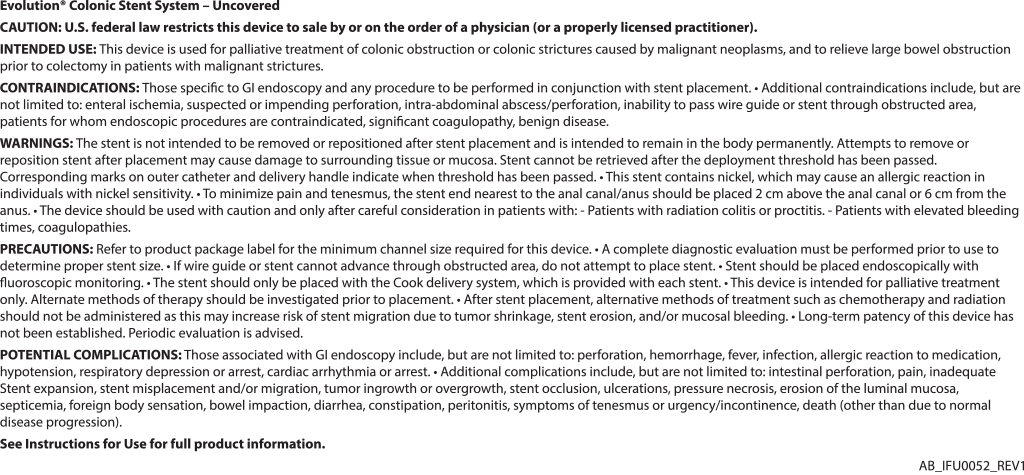
Refer to the Evolution® Colonic Controlled-Release Stent – Uncovered product page for the complete Instructions for Use.
Dr. Michael Hünerbein was not a paid consultant of Cook Medical at the time of this publication.
800.457.4500
Sign Up. Get Email about News, Products, and Events from Cook Medical.
Evolution® controlled-release stents
Evolution gives you the ability to deliver stents with more control and less stress. Now, no matter where you are stenting in the GI tract, you can focus even more on patient outcomes.
Evolutionary stent
The stent, the most important aspect of the procedure, is meant to provide relief specific to the patient’s disease state. That’s the guiding concept behind all of our Evolution stents.
Evolutionary precision*
Precision is gaining access to your stenting position and then maintaining that position throughout the deployment process, even in complex and challenging anatomy.
*For Evolution duodenal and Evolution colonic stents.
Evolutionary control
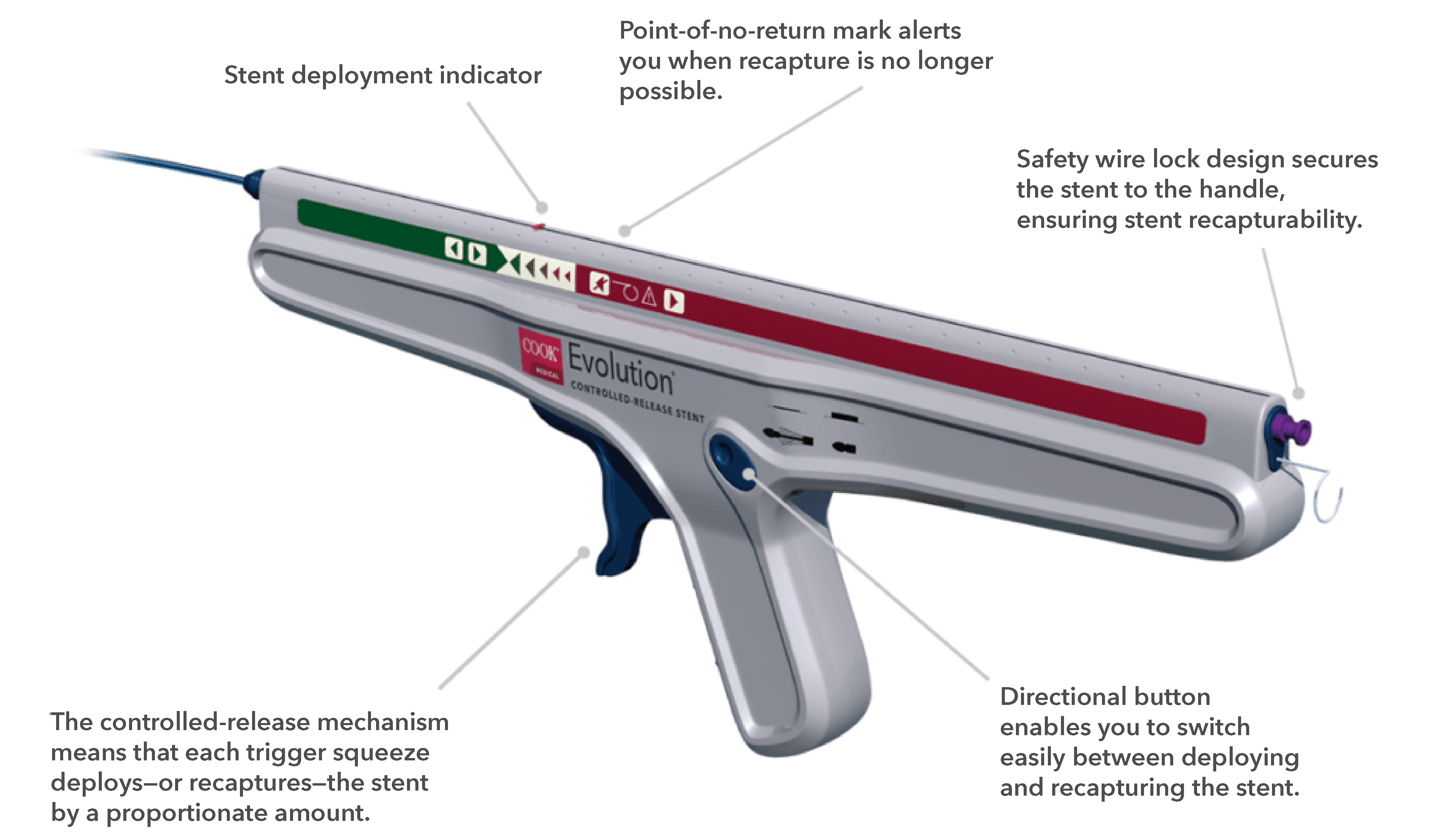
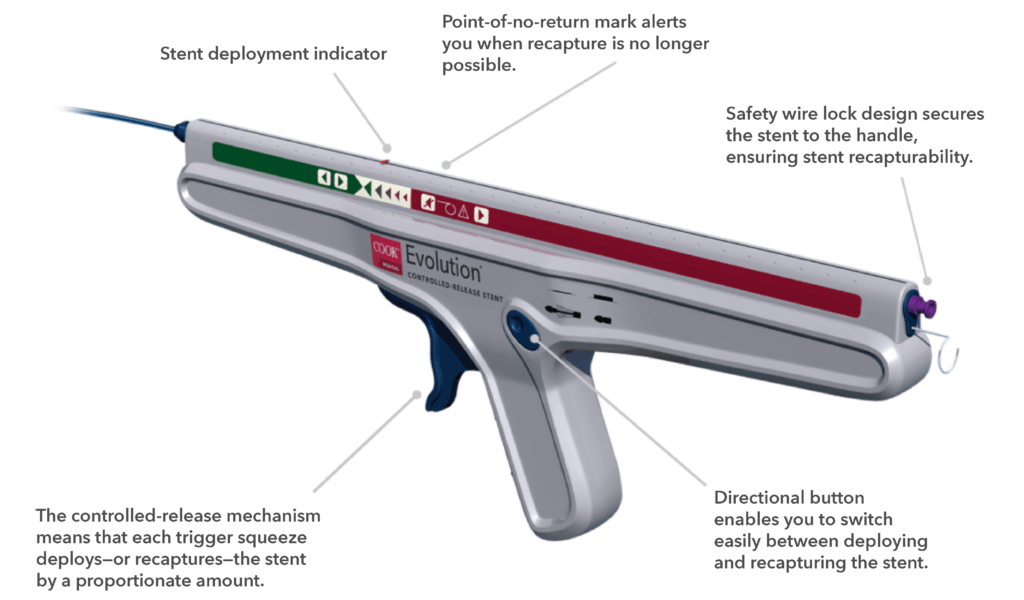
An intuitive, controlled-release system with the ability to recapture gives you and your assistant the confidence needed to remain in sync throughout the deployment process.
The controlled-release mechanism minimizes potential stent jumping, allowing for precise stent placement.
Click for more information on:
Evolution duodenal
Evolution colonic
Evolution esophageal
 Evolutionary design
Maneuver through the duodenum’s difficult angulations and deploy a stent that conforms to the anatomy’s particular curve, even in the complex third or fourth portions of the duodenum.
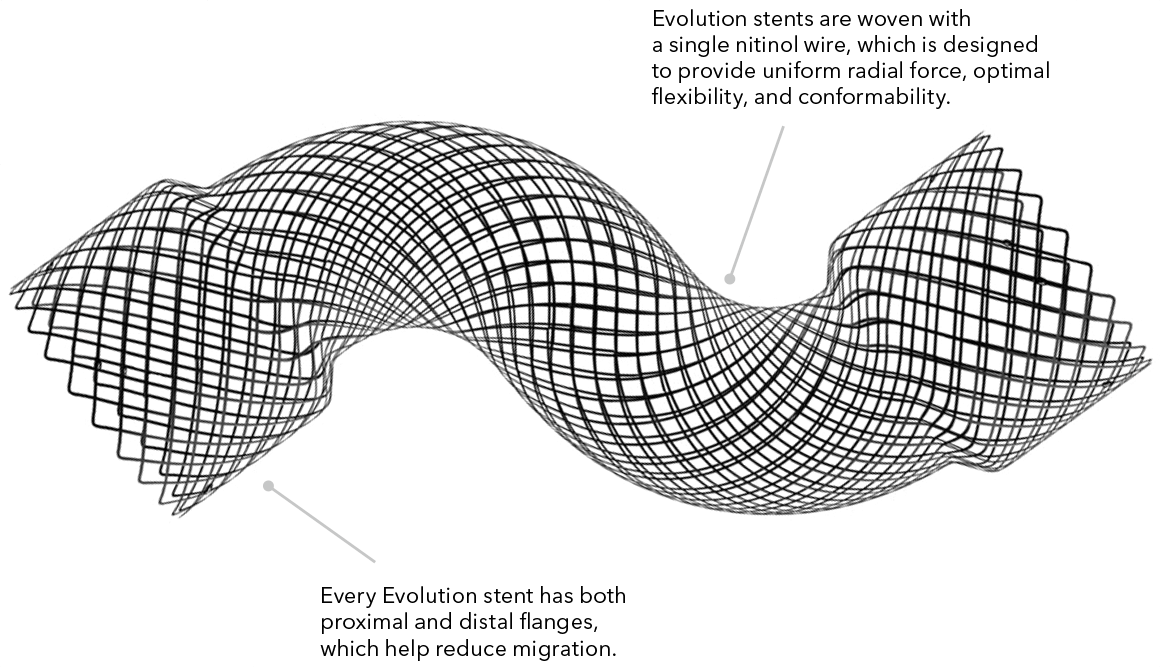
- Evolution stents are woven with a single nitinol wire, which is designed to provide uniform radial force, optimal flexibility, and conformability.
- Every Evolution stent has both proximal and distal flanges, which are designed to aid in preventing migration.
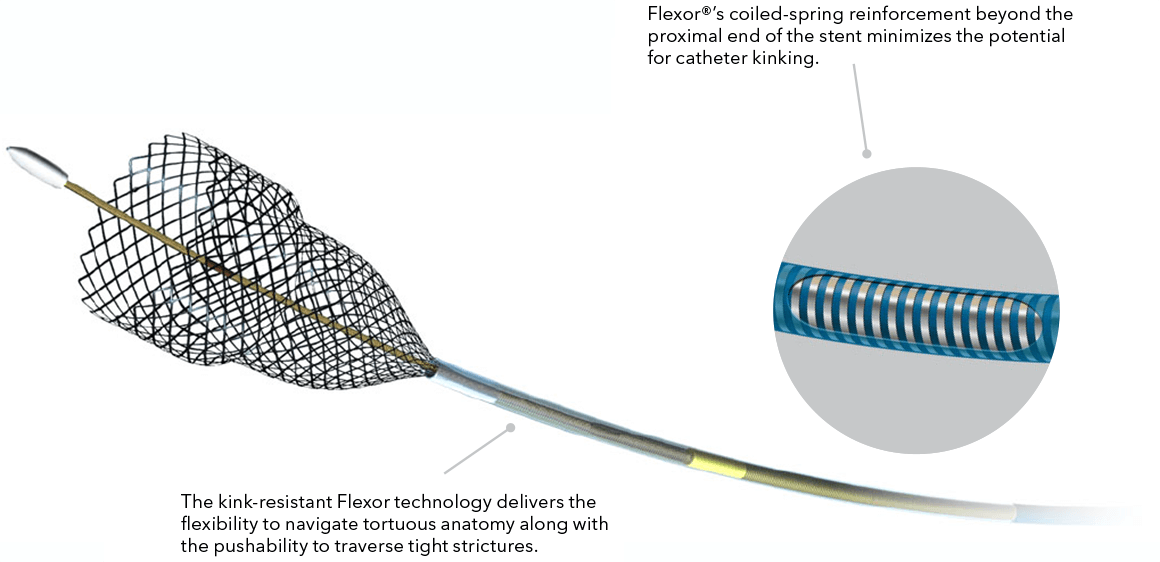
- Flexor’s coiled-spring reinforcement beyond the proximal end of the stent minimizes the potential for catheter kinking.
- The kink-resistant Flexor technology delivers the flexibility to navigate tortuous anatomy along with the pushability to traverse tight strictures.
- The stent’s 18 crowns deliver an even distribution of radial force to avoid the concentration of pressure at any one point of contact in an effort to reduce pain and the risk of perforation.

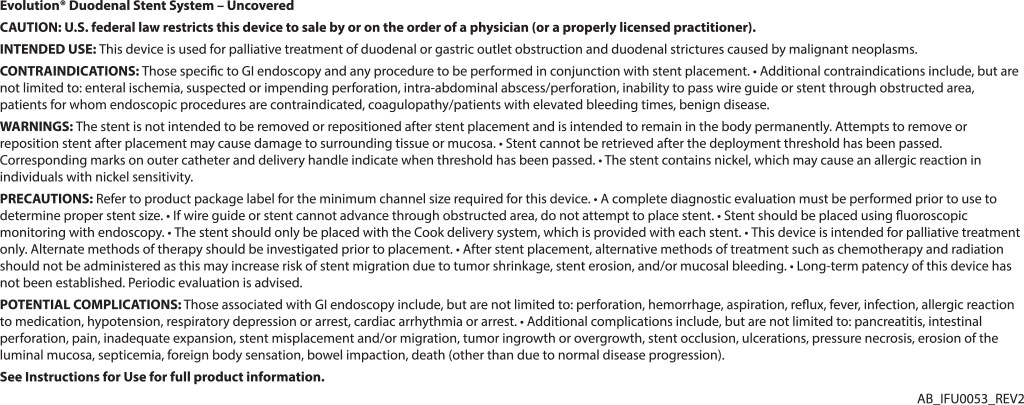
Go here to learn more about the Evolution Duodenal Controlled-Release Stent — Uncovered.
Request Information or In-service
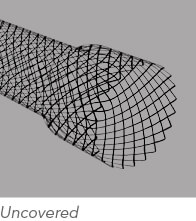 Whether you do colonic stenting regularly or rarely, for palliation or as a bridge to surgery, Evolution stents are designed to give your patient relief and can be delivered confidently even in the most complex and tortuous environments.
- Evolution stents are woven with a single nitinol wire, which is designed to provide uniform radial force, optimal flexibility, and conformability.
- Every Evolution stent has both proximal and distal flanges, which are designed to aid in preventing migration.
- Flexor’s coiled-spring reinforcement beyond the proximal end of the stent minimizes the potential for catheter kinking.
- The kink-resistant Flexor technology delivers the flexibility to navigate tortuous anatomy along with the pushability to traverse tight strictures.
- The stent’s 20 crowns deliver an even distribution of radial force to avoid the concentration of pressure at any one point of contact in an effort to reduce pain and the risk of perforation.
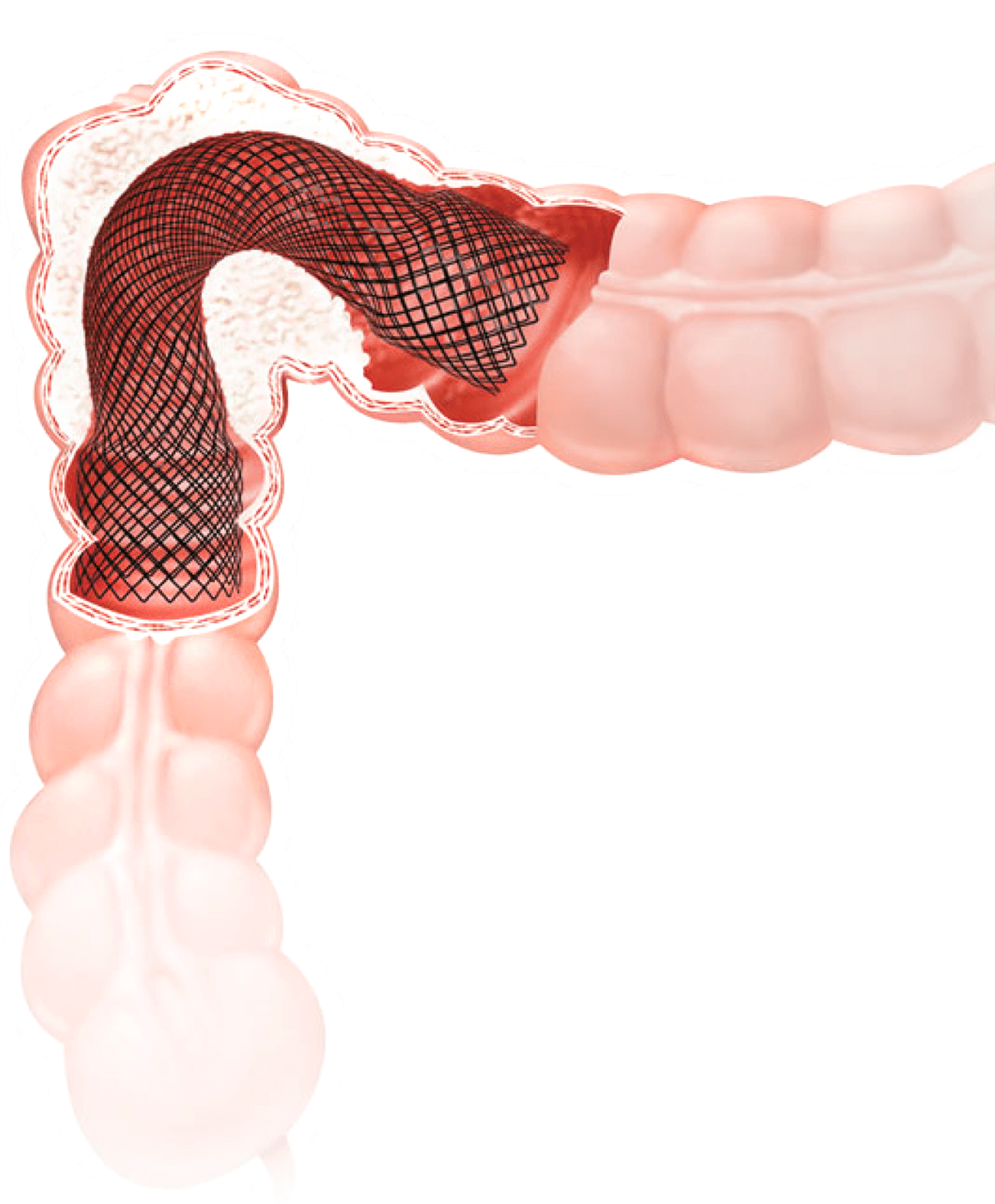
Go here to learn more about the Evolution Colonic Controlled-Release Stent — Uncovered.
Request Information or In-service
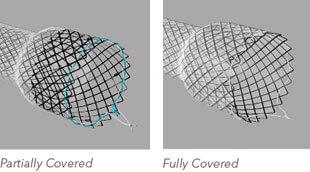
With the right balance of radial force to open the stricture, this stent is also durable enough to withstand the corrosive environment of the esophagus.
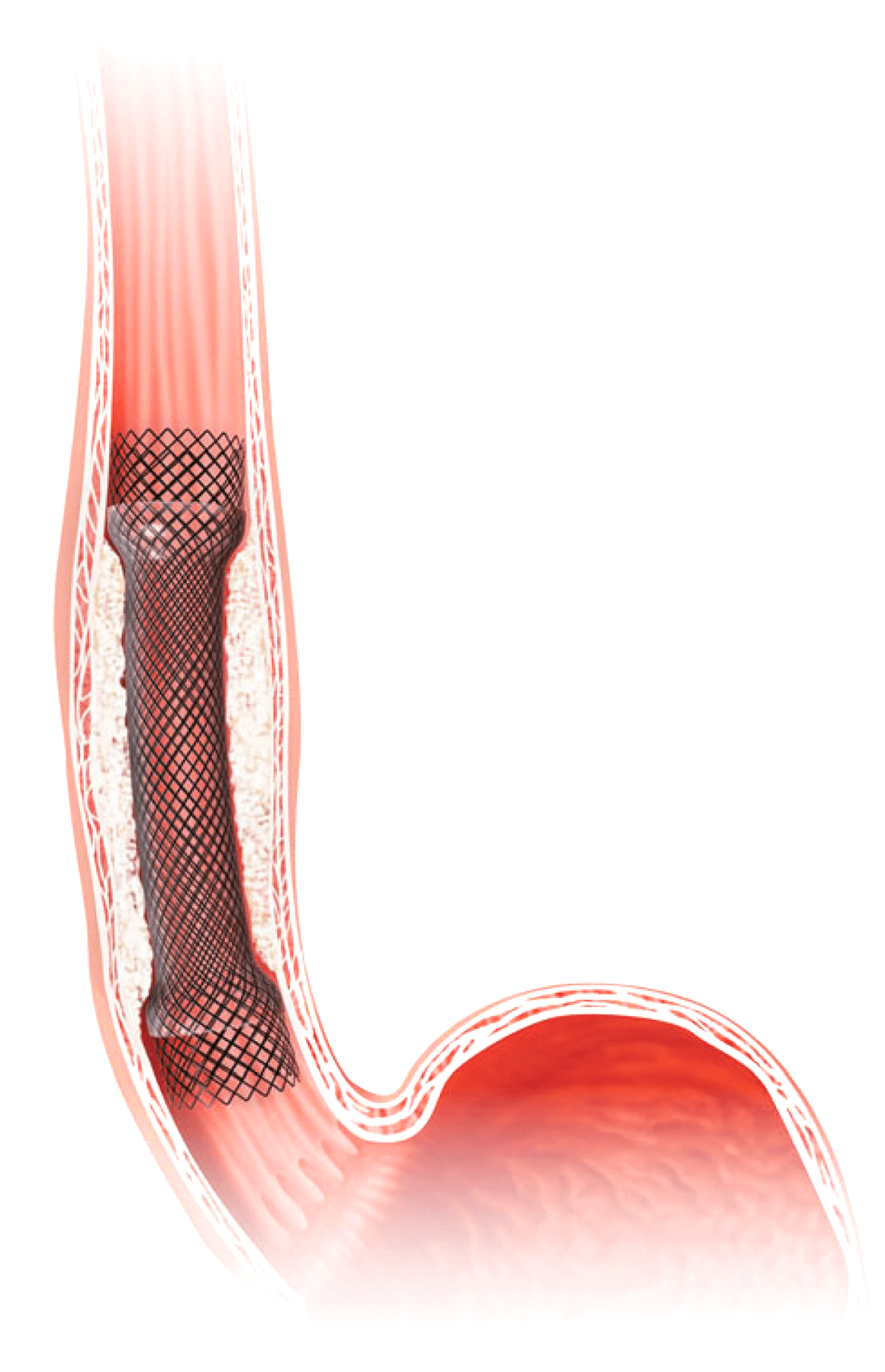
Go here to learn more about the Evolution Esophageal Controlled-Release Stent — Fully Covered.
Request Information or In-service
Globally, colorectal cancer (CRC), also known as colon cancer, is the fourth most common cause of cancer-related death. But the fact is, CRC is one of the most preventable cancers. Either people aren’t being informed, or they’re not taking the time to get screened by scheduling a colonoscopy. It’s estimated that 23 million adults (1 in 3 adults between the ages of 50 and 75) don’t have a colonoscopy as recommended. If screened in time, CRC can be treated before it’s too late. We can start by spreading the word about CRC and the importance of a colonoscopy.
 What is colorectal cancer (CRC)?
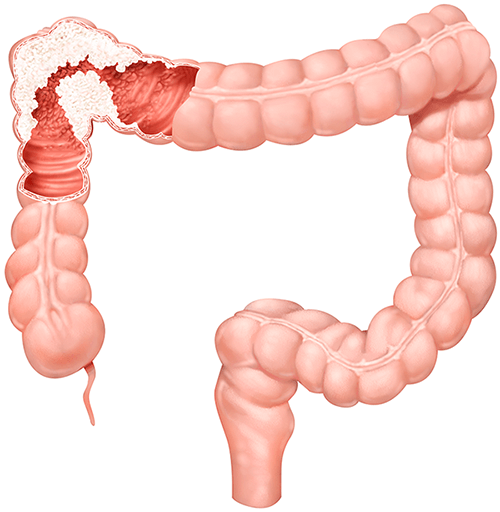
CRC is a form of cancer that develops in the colon or the rectum. It is caused by a non-cancerous adenoma or polyp growing on the inner lining of the large intestine. Over the course of many years, a non-cancerous polyp may eventually develop into cancer. However, it should be noted that not all polyps will develop into cancer.
Key statistics about CRC
- It is the second most common cancer diagnosed in women.
- It is the third most common cancer diagnosed in men.
- It accounts for almost 900,000 deaths annually.
Causes and risks
Although anyone can develop CRC, those with a family history of it have a greater risk of developing CRC in their lifetime. Lifestyle factors such as diet, weight, and exercise can also contribute to an individual’s risk of developing this type of cancer. Making healthy lifestyle choices can greatly reduce the chance of developing CRC.
Symptoms
- A change in bowel habits, including diarrhea, constipation, or narrowing of the stool, that lasts more than a few days
- Rectal bleeding with bright red blood
- Bloody stool
- Cramping or abdominal pain
- Weakness and fatigue
- Unintended weight loss
If experiencing these symptoms, contact a healthcare professional.
Colorectal cancer is preventable, treatable, and beatable.
In addition to ulcers, tumors, and areas of inflammation, a colonoscopy can also identify pre-cancerous polyps. The average colonoscopy only takes about 30 minutes and only needs to be performed every 10 years. A colonoscopy is a simple screening. And it just may be the first step to beating this cancer once and for all.
—
References: