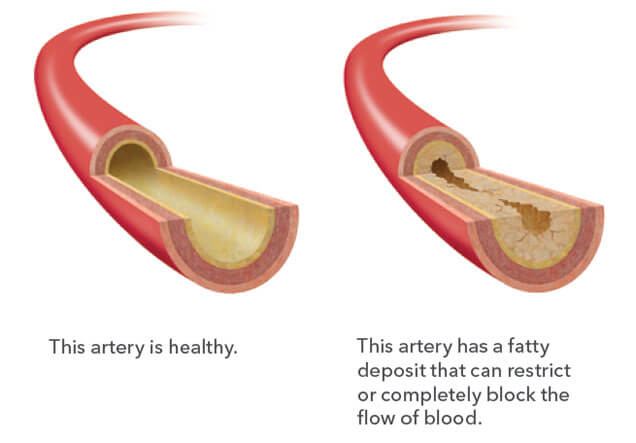
What is PAD?
Peripheral arterial disease (PAD) is the result of narrowing of the arteries in the legs, stomach arms, and head. PAD is usually caused by atherosclerosis, a disease that causes arteries to harden due to a buildup of plaque. Symptoms of PAD include pain or cramping in the thigh, calf, or hip, especially during exercise; numbness and weakness in the legs; sores on toes, feet, and legs that will not heal; coldness in the lower leg and feet; and shiny skin on legs and/or feet.
Physical activity
Exercise is the first step to improving the symptoms of PAD. Patients suffering from PAD must have a modified exercise program because of different risk factors that come along with the disease. The objectives of exercise for PAD is to lessen the symptoms, improve walking, improve exercise capability, decrease physical disability, and to also decrease the chance of potential cardiovascular events resulting from PAD.
Avoid tobacco
If you smoke, quit. If you don’t smoke, don’t start. Not only does smoking cause cancer and other diseases, it also plays a factor in PAD. Smoking can make symptoms worse, and it can increase the risk of PAD by 2-6 times.
Eat right
Having a heart-healthy diet is key to preventing PAD and also to managing the symptoms. Foods that are low in fat and high in omega 3’s are essential. Also getting the recommended daily amount of fruits, vegetables, and whole grains are a part of a heart-healthy diet. Foods to avoid are red meats, sugary foods and beverages, and foods high in sodium. Also, patients are encouraged to limit the intake of alcohol.
Keep cholesterol down
What nutrients cause cholesterol to rise? These nutrients are saturated fats, mostly found in foods that come from animals. Another culprit is foods that contain trans-fats, which are hydrogenated fats and oils mostly found in baked goods, margarine, and coffee creamer.
The good news
Not all fats are bad! Monounsaturated and polyunsaturated fats will actually help lower blood cholesterol levels. Foods such as avocados, nuts, peanut butter, and tofu are high in these nutrients. Talk to your doctor about setting up a diet and exercise program that is right for you.
References
About Peripheral Artery Disease (PAD). http://bit.ly/1sHOAUf. Accessed June 16, 2016.
Prevention and Treatment of PAD. (n.d.). Retrieved July 20, 2016, from http://www.heart.org/HEARTORG/Conditions/More/PeripheralArteryDisease/Prevention-and-Treatment-of-PAD_UCM_301308_Article.jsp#.V4-wr2NwTHg.
Living With Peripheral Artery Disease. – NHLBI, NIH. http://1.usa.gov/1UXdS77. Accessed June 16, 2016.
Peripheral artery disease (PAD). Symptoms and causes. http://mayocl.in/1W1hH0d. Published 2015. Accessed June 16, 2016.
 Having always been active and a sports enthusiast, Bill Doherty initially thought that the cramping in his left calf was due to muscle strain. He tried physiotherapy, but the frequency and regularity of the cramping became impossible to ignore. He also noticed that his left foot felt colder than his right foot.
(more…)
Bill Fischer, left, celebrates his 60th wedding anniversary with his wife, Barbara, right, their daughter, Gail McDaniel, and her partner, Keith Hamm. Bill underwent a surgical procedure to treat his advanced peripheral arterial disease.
Knowing the symptoms of peripheral arterial disease (PAD) is not only important for at-risk individuals but also for their family members.
Gail McDaniel, global marketing manager in Aortic Intervention at Cook Medical, knows the importance of PAD awareness when it comes to aging parents. Her father, Bill Fischer, was a lifelong smoker, and smoking is the leading cause of PAD. He developed an ulcer on his foot that continued to worsen. His doctor treated the symptoms but never looked deeper into the cause of the open sore.
When Bill’s foot didn’t heal after several months, he was finally sent to a vascular surgeon, who discovered that Bill had PAD. The ulcer was a result of a 100% occlusion in his superficial femoral artery (SFA), which was blocking blood flow to his lower leg.
“Ironically, he was diagnosed the day Cook received U.S. approval for the Zilver® PTX® Drug-Eluting Peripheral Stent,” McDaniel said. “Unfortunately, he didn’t qualify for a stent, because his disease had progressed too far.” Her father underwent a difficult bypass surgery followed by a long and very painful recovery.
“As we all age, it’s important to be aware of diseases such as atherosclerosis and PAD,” McDaniel said. “By recognizing the early signs of PAD, it’s possible to prevent pain and suffering—or worst case—losing a limb or life.”
Learn more about PAD at the National Institutes of Health website.
MORE ON PAD AWARENESS MONTH
10 facts about peripheral arterial disease
U.S. trends in diabetes and obesity
What is peripheral arterial disease?

Bill Fischer, left, celebrates his 60th wedding anniversary with his wife, Barbara, right, their daughter, Gail McDaniel, and her partner, Keith Hamm. Bill underwent a surgical procedure to treat his advanced peripheral arterial disease.
 Knowing the symptoms of peripheral arterial disease (PAD) is not only important for at-risk individuals but also for their family members.
Gail McDaniel, global marketing manager in Aortic Intervention at Cook Medical, knows the importance of PAD awareness when it comes to aging parents. Her father, Bill Fischer, was a lifelong smoker, and smoking is the leading cause of PAD. He developed an ulcer on his foot that continued to worsen. His doctor treated the symptoms but never looked deeper into the cause of the open sore.
When Bill’s foot didn’t heal after several months, he was finally sent to a vascular surgeon, who discovered that Bill had PAD. The ulcer was a result of a 100% occlusion in his superficial femoral artery (SFA), which was blocking blood flow to his lower leg.
“Ironically, he was diagnosed the day Cook received U.S. approval for the Zilver® PTX® Drug-Eluting Peripheral Stent,” McDaniel said. “Unfortunately, he didn’t qualify for a stent, because his disease had progressed too far.” Her father underwent a difficult bypass surgery followed by a long and very painful recovery.
“As we all age, it’s important to be aware of diseases such as atherosclerosis and PAD,” McDaniel said. “By recognizing the early signs of PAD, it’s possible to prevent pain and suffering—or worst case—losing a limb or life.”
Learn more about PAD at the National Institutes of Health website.
This story reflects the experience of one individual. Every peripheral arterial disease case is unique. Information included in this article should not be used as the basis for any treatment recommendation.
Peripheral arterial disease (PAD) is a serious, underdiagnosed disease that is similar to coronary artery disease. Both develop when cholesterol levels and scar tissue build up, causing the arteries to narrow and restrict blood flow. The difference is that PAD affects arteries outside the heart.
Untreated, PAD can lead to difficulty in walking and, in its most severe stage, gangrene, leading to leg amputation. Also, people who have PAD often have arterial blockages in other parts of the body and are therefore at greater risk of suffering a heart attack or stroke.
Here are 10 facts about PAD:
1. PAD affects 12-14% of the world’s population.
2. PAD affects six times more people worldwide than HIV.
3. Eight million Americans suffer from PAD.
4. PAD affects 20% of patients over age 75.
5. One in three diabetics over age 50 suffer from PAD.
6. Smoking increases the likelihood of developing PAD by 400%.
7. Each year, approximately 150,000 lower-limb amputations in the U.S. can be attributed to PAD.
8. Within two to four years of the first amputation, one-third of all PAD patients will lose the other limb.
9. Only 50% of PAD amputees survive more than four years.
10. About 20-50% of people with PAD are asymptomatic.
KNOW YOUR ABI!
If you have one or more risk factors, including smoking, diabetes, obesity, high blood pressure, high cholesterol, or family history, visit your doctor to request an ankle-brachial index (ABI) test. The ABI is a simple test that compares the blood pressure of the arms and legs to determine if blood flow is restricted.
Learn more about PAD at the National Institutes of Health website.
MORE ON PAD AWARENESS MONTH
U.S. trends in diabetes and obesity
What is peripheral arterial disease?